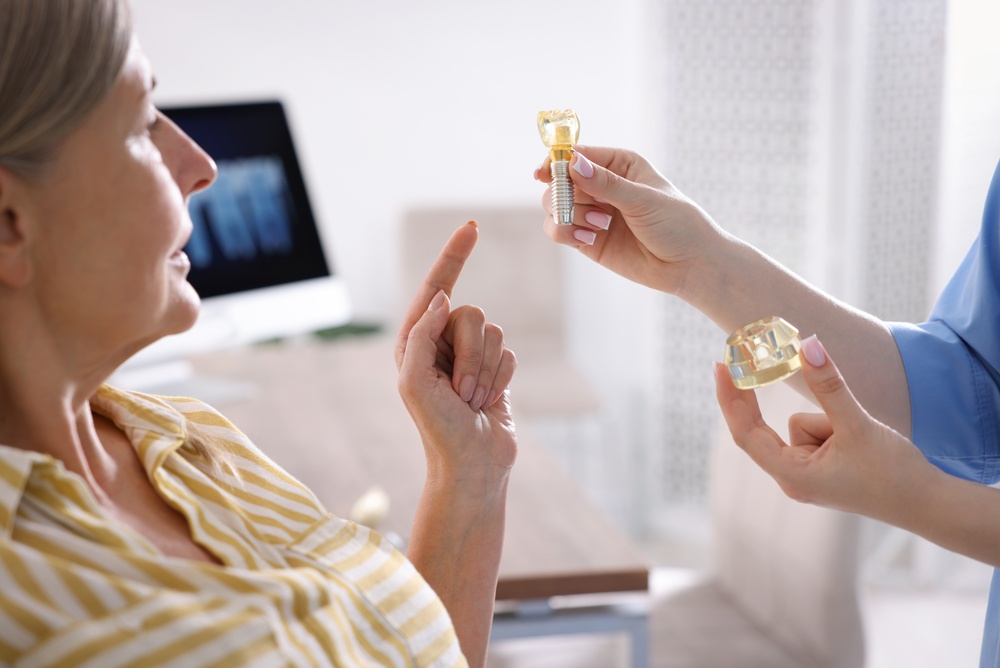
One of the most common questions before dental implant surgery isn’t about the procedure itself. It’s about what happens afterward, and how long before life goes back to normal.
The First 24 to 72 Hours
This window is the most intense part of recovery, though most patients describe it as manageable rather than severe. Mild to moderate swelling and some bruising around the surgical site are normal and tend to peak around day two. Discomfort is usually controlled well with over-the-counter pain medication and ice packs, as recommended on your post-op instructions. Some minor bleeding or oozing in the first day is expected.
The First Week
Swelling and soreness generally start easing noticeably by days four through seven. Most patients return to work and regular activities within a few days, sooner if the case involved a single implant rather than All-on-4 full mouth implants. Soft foods are recommended during this stretch to avoid putting pressure on the healing site.
Weeks Two Through Four
Visible healing largely wraps up during this window. Gum tissue around the implant settles into its shape, and most residual tenderness resolves. A follow-up visit often happens around this point to confirm everything is healing as expected.
The Part That Actually Takes Months: Osseointegration
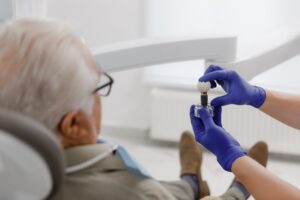
Underneath the surface, the real work is still happening. The titanium implant post needs to fuse with the jawbone in a process called osseointegration, which typically takes three to six months. This is a biological process that can’t be rushed, and it’s the main reason the full timeline for implants runs longer than most other dental procedures. Patients with lower bone density, or who needed bone grafting beforehand, may be on the longer end of that range.
When the Final Restoration Goes On
Once your periodontist confirms osseointegration is complete, usually through a follow-up exam and imaging, the permanent crown, bridge, or full-arch restoration is placed. This is the step that completes the process and the part most patients are looking forward to the whole time.
What Can Extend the Timeline
A few factors tend to add time. Needing bone grafting or soft tissue work before placement adds healing time upfront. Smoking slows healing significantly and raises the risk of complications at every stage, which is part of why it’s flagged as a risk factor on our implant maintenance page as well. Certain health conditions can also affect how quickly bone integrates. Dr. Puri will give you a timeline specific to your case rather than a generic estimate, since bone density, implant location, and overall health all play a role.
Not Sure If You’re a Candidate Yet?
If you’re still deciding whether implants are the right option, our candidacy page walks through what factors into that decision before you ever get to the recovery stage.
Ready to Start Your Own Timeline?
Schedule a consultation with Implant & Periodontal Associates Northwest in Richland, WA to find out what your own recovery would look like based on your bone health and treatment plan.